Powerplay Rules in ODI and T20 Cricket, Explained

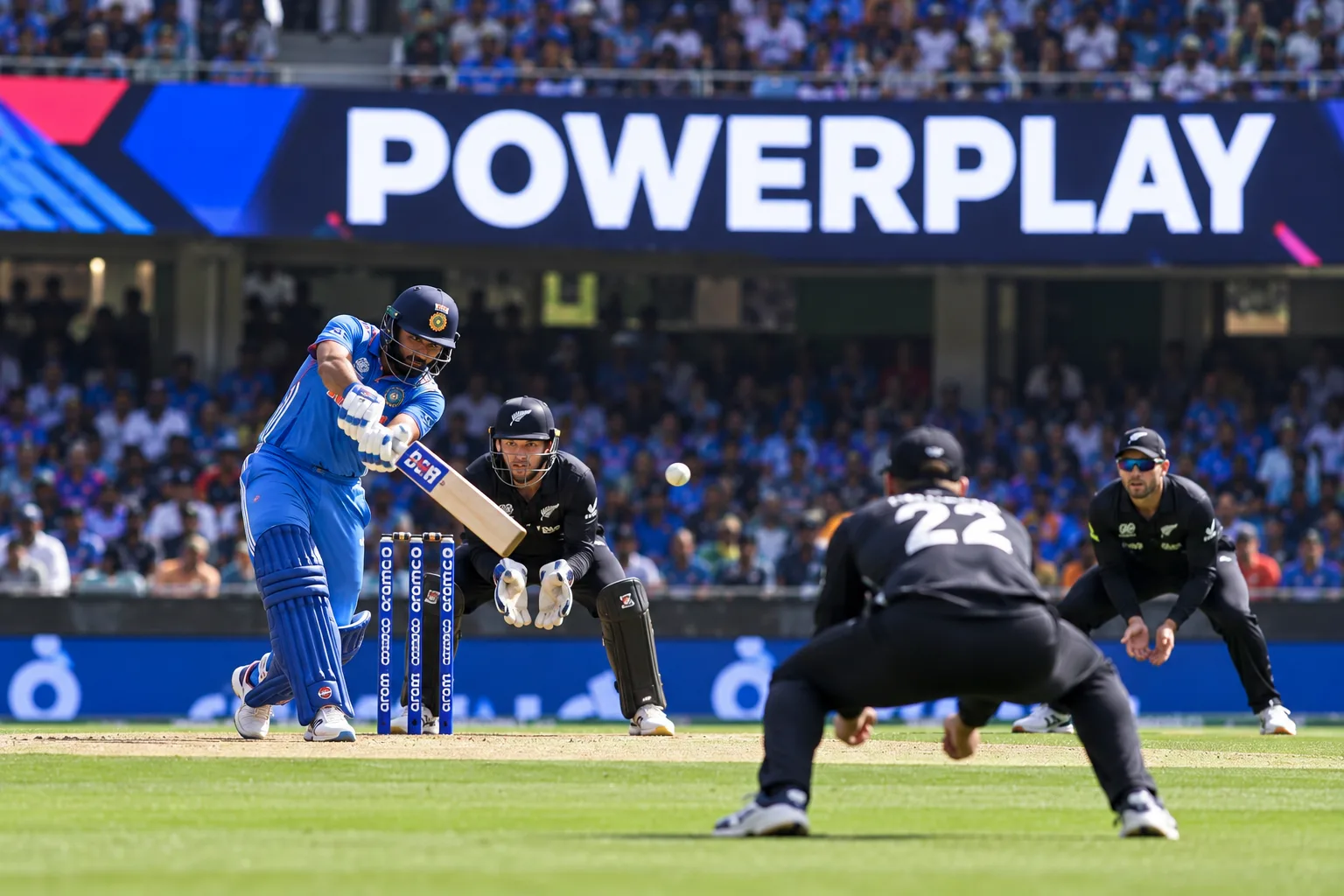
Switch on any limited-overs match and you will notice something in the opening overs. The ball keeps racing to the boundary, the fielders look oddly bunched near the bat, and the commentators keep saying the word "powerplay" like it explains everything. For a lot of fans, it does the opposite. Why are the fielders not spread out to save runs? Why does the captain suddenly change his field after the sixth over? The answer sits in a small set of rules that quietly shape how the whole innings unfolds.
Powerplays come down to one thing: where the fielders are allowed to stand. By limiting how many can patrol the deep, cricket forces an early contest between a batter trying to score freely and a bowler trying to survive. Once you understand the fielding circle and the numbers that go with each phase, you start watching these matches with fresh eyes. So let us walk through it, format by format.
The fielding circle: the heart of every powerplay
Every powerplay rule hangs on one marking you can see on the ground: the 30-yard circle. It is the oval drawn roughly 30 yards from each set of stumps, and it splits the field into an inner ring and the outfield beyond it. The powerplay simply caps how many fielders the captain can post outside that circle at any given moment.
Fewer fielders in the deep means more gaps in front of the bat and shorter boundaries left unguarded. That is the whole point. The rule rewards attacking batting early and stops captains from parking everyone on the rope. If you are still getting comfortable with where silly point, backward square and long-on actually stand, our guide to cricket fielding positions explained is a handy companion to this piece.
Powerplay rules in ODI cricket: three phases
A 50-over innings is split into three fielding phases. Each one loosens the restrictions a little as the innings grows.
- Powerplay 1 (overs 1 to 10): only two fielders are allowed outside the 30-yard circle. This is the most attacking window of the innings.
- Powerplay 2 (overs 11 to 40): a maximum of four fielders can go outside the circle. This long middle phase is where the game breathes.
- Powerplay 3 (overs 41 to 50): up to five fielders are permitted in the deep, giving the bowling side the most protection just as batters look to accelerate at the death.
Notice the pattern. Early on, with only two men out, openers can drive and clip into big gaps, which is why good starts are so prized. Through the middle, with four out, the game often settles into rotating strike and picking off the odd bad ball. At the death, five fielders on the rope make clean boundary hitting harder, so batters lean on timing, ramps and running hard.
Powerplay rules in T20 cricket: the first six overs
T20 keeps things far simpler, because there is no room for three phases in a twenty-over sprint. There is one powerplay, and it covers the first six overs.
- Overs 1 to 6 (powerplay): only two fielders are allowed outside the circle.
- Overs 7 to 20: a maximum of five fielders can be posted outside the circle for the rest of the innings.
That jump from two to five is dramatic, and it is exactly why T20 openers swing so hard in the first six. With the field up, even a top edge can clear the inner ring for four. The moment the powerplay ends, the deep fills up and quick singles become the main way to keep the scoreboard ticking. This compressed, front-loaded aggression is a big reason the shortest format plays the way it does, as we explore in how T20 cricket changed the game.
Why the powerplay matters tactically
The restriction creates a genuine duel, and both sides treat it as a mini-match within the match.
For the batting side
The powerplay is the easiest time to score boundaries, so sides often send their most fearless hitters up top. The trade-off is clear: attack the gaps while the field is up, but lose too many wickets and the rest of the innings turns into damage control. Many teams now set themselves a target score for the powerplay rather than simply trying to get through it.
For the bowling side
Captains usually hand these overs to bowlers who can swing or seam the new ball, hoping movement beats the aggression. A couple of early wickets can quieten the whole innings, because new batters rarely attack straight away. The bowler's job is to tempt the big shot while the two outfielders quietly guard the most dangerous gaps.
A few things fans often get wrong
Powerplays apply to limited-overs cricket, not Test matches, which have no such fielding restrictions. The circle rule also counts fielders at the moment the ball is bowled, so a captain cannot sneak an extra man out just before delivery. And in rain-affected games the powerplay overs can be recalculated along with the target. If you like keeping every fixture and live score in one place, setting up a cricket id makes following along simple.
Wrapping up
Once the circle clicks into place in your mind, the powerplay stops being jargon and starts being a story. Two fielders out, bat flowing, bowler searching for swing, then the field spreading and the rhythm changing. Watch the next match with the over number in mind, and you will see the tactics shift right in front of you.