How ICC Cricket Rankings Work for Teams and Players

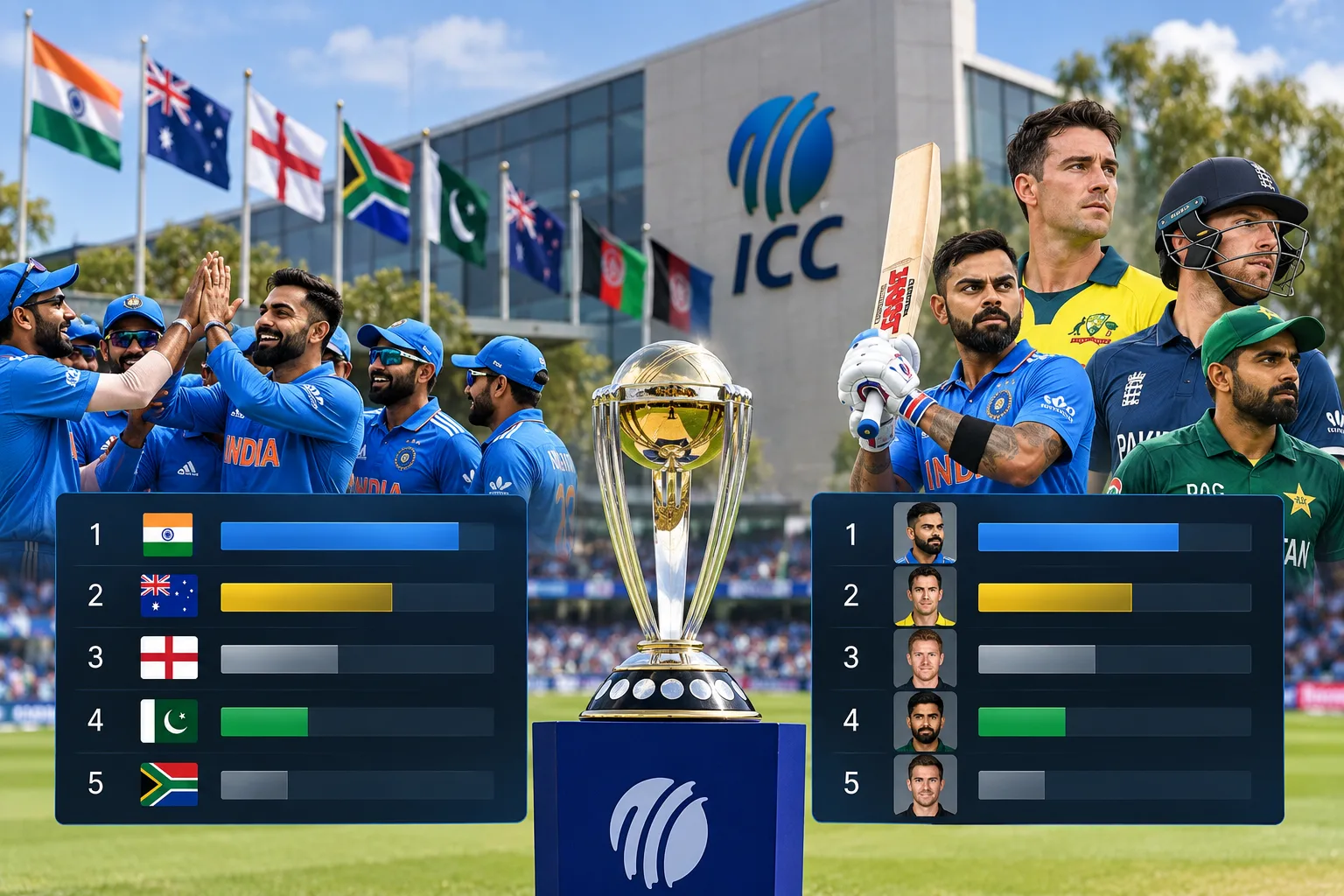
Every cricket fan has had that moment. India win a big series, somebody checks the table, and the team is still sitting second. Or a batter smashes three hundreds in a row and barely climbs a couple of spots. It can feel random, almost unfair. But the ICC rankings are not a mood or an opinion poll. They run on a fixed points system that quietly rewards who you beat, how often, and how recently.
Once you understand the logic, the numbers start making a lot more sense. You stop asking "why is he only number four?" and start seeing exactly what a player or team needs to do to climb. So let us walk through it slowly, the way a friend might explain it over a cup of chai during the tea break.
One sport, three separate ladders
The first thing to get straight is that there is no single, overall ranking in cricket. The ICC keeps the three formats completely apart. A side can be the best Test team in the world and still be middling in T20Is, because the skills, the pace and the pressures are so different. If you are still fuzzy on how the three formats differ, our guide to the formats of cricket: Test, ODI and T20 is a good place to start.
So when someone says "they are the number one team", always ask: number one in what? Tests, ODIs and T20Is each have their own table for both teams and players. The methods rhyme, but the ladders never mix.
How team rankings are built
Team rankings sit on a rating points system. Every match and series a side plays feeds into a running calculation, and the output is a single rating figure for each team. Higher rating, higher spot on the table. Simple on the surface.
The clever part is how those points are earned. You do not get the same reward for every win. Beat a strong, higher-ranked side and you collect a healthy chunk of points. Beat a team ranked well below you and the gain is modest, because you were expected to win anyway. Lose to a weaker team, though, and you can drop sharply. The system is constantly comparing the result against what was expected.
Why opponent strength matters so much
This is the bit people miss. Your rating is not just about winning, it is about who you beat and by how clear a margin across a series. A narrow home series win over a lower side might nudge your number up only a little. A clean away sweep against the top-ranked team can shoot you up several points in one go. The strength of the opponent acts like a multiplier on the result.
- Big win over a top side: large points gain
- Expected win over a weaker side: small gain, sometimes almost none
- Upset loss to a lower side: painful drop
How player rankings move
Player rankings follow the same spirit but zoom in on the individual. Batters, bowlers and all-rounders each get their own rating in each format, scored out of a maximum, and the table is simply everyone lined up by that rating.
For batters, it is not only about piling up runs. The system weighs the quality of the bowling attack you scored against, the match situation, and whether your runs actually helped the team. A fighting fifty against a fearsome attack on a tricky surface can be worth more to your rating than a flat hundred against part-timers. Knowing your basic numbers helps here too, and our explainer on average, strike rate and economy makes those terms click.
Bowlers are judged in a similar way. Taking the wickets of top-order batters counts for more than cleaning up the tail. Keeping runs tight while taking those wickets helps. And all-rounders? Their rating usually blends their batting and bowling ratings together, which is why genuine all-rounders are so rare at the top and so prized when they get there.
The rolling period, or why old form fades
Here is the feature that explains most of the "but he scored so much last year!" confusion. Rankings work on a rolling period. Recent performances carry full weight, while older ones gradually count for less and eventually drop out of the calculation altogether.
In plain terms, the table rewards current form, not career totals. A player can sit at number one, go quiet for several months, and slide down even without playing badly, simply because his big scores have aged out while rivals keep performing. It keeps the rankings honest and alive, rather than frozen around past legends.
Reading the table without getting fooled
A few habits will save you from the usual traps. First, always check the format before arguing. Second, remember that a small gap in rating points can mean the teams are genuinely close, while a big gap is hard to fake. Third, do not panic over one result; the rolling system smooths things out over time.
It also helps to watch the fixtures that actually move the needle, like a top-two clash or an away series against a strong host. If you like keeping every fixture and live score in one place, a cricket id makes following along simple, so you can see a result and immediately picture how the table might shift.
The short version
ICC rankings are not magic and they are not guesswork. Teams earn rating points weighted by opponent strength and result; players earn ratings based on the quality of their contributions, not just raw numbers; and everything runs on a rolling window that keeps recent form in charge. Once you see the machinery, the table stops being frustrating and starts telling a story, one series and one innings at a time.